
A documented pioneer life

Thomas Sleight

25 September 1833 — 17 March 1918

English convert. Atlantic emigrant. Plains traveler. Bear Lake pioneer. Teacher, missionary, civic leader, family historian, and patriarch.

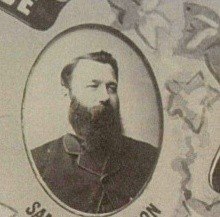
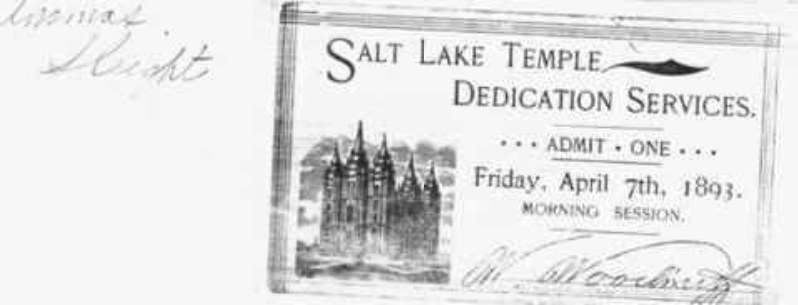
His story survives unusually well: hundreds of pages of journals, two mission certificates, an 1885 missionary portrait, a temple dedication ticket, family photographs, a preserved cabin, and generations of family history work.

84
years lived
1854
Germanicus crossing
1863
Paris pioneer
2
documented missions
Portrait of Thomas Sleight from the October 1885 British Mission composite
Thomas Sleight, British Mission composite, 1885

A life in motion

From Lincolnshire to Bear Lake — and back across the Atlantic

1833SwinesheadLincolnshire
1854LiverpoolGermanicus
1854New OrleansMississippi
1854–57St. LouisMissouri
1857GenoaNebraska Territory
1860Salt LakeUtah Territory
1861Hyde ParkCache Valley
1863–1918ParisBear Lake
1884–86ManchesterBritish Mission

1854 · Atlantic passage

From England toward a new continent

Thomas’s documented 1854 journey aboard the Germanicus opens the migration story: Liverpool, the Atlantic crossing, New Orleans, and then upriver toward St. Louis.

Chronology · V2.1

A life in primary sources

The timeline favors Thomas’s own journals and contemporary records. Later family histories are used as cross-checks, and contradictions are shown rather than quietly resolved.

0moments shown

1863 · Bear Lake Valley

A settlement becomes home

Cabins, fence lines, wagons, winter weather, and the high mountain valley frame the place Thomas would help build — and remain connected to for the rest of his life.

Thomas Sleight's ticket for the Salt Lake Temple dedication, Friday April 7, 1893 morning session
Friday, April 7, 1893 · Morning session

“I stood in the presence of God.”

Thomas Sleight, describing the Salt Lake Temple dedication, 7 April 1893

The surviving record

Documents you can still put your hand on

These are not decorative stand-ins. They are the actual family-history images currently attached to Thomas’s record or extracted from the source volumes used for this project.

Mary Matilda Wixom Sleight

The second half of the story

Mary was born in Little Cottonwood in 1853 and came to Paris with the Wixom family in 1864. She married Thomas in 1867 and raised nine children with him in Bear Lake. When Thomas left for Britain in 1884, Mary remained in Paris with six children and gave birth to Richard Solomon while Thomas was abroad.

Her influence reaches far beyond the household. The Wixom Family History says Mary’s requests for ancestral information helped start the movement that ultimately produced the book. Decades later, Thomas and Mary’s granddaughter Ruth Sleight Widdison took on the enormous job of editing and typing the manuscript for publication.

Thomaskept the journals → Marypushed the genealogy → Richardsupported the work → Ruthedited the history → Nowthe archive reconnects it

1884–1886 · British Mission

Britain returns as mission ground

Industrial streets, meeting-house doors, printed tracts, and the surviving 1885 portrait evoke Thomas’s return to Britain — this time as a missionary rather than an emigrant.

Research notes

Where the record disagrees with itself

Open question

When did Thomas emigrate?

Later Sleight and Wixom family sketches say Thomas came to America at about seventeen. Germanicus documentation and Thomas’s own 1917 recollection place his Atlantic crossing in 1854, at age twenty. V1 treats 1854 as the stronger date while retaining the older family tradition as a documented conflict.

Date conflict

Exactly when did the first Paris company arrive?

A later Thomas Sleight newspaper recollection pairs dates with weekdays that do not align with the 1863 calendar. A preservation account based on the journals says Thomas was called September 14, left the next day, traveled eleven days, and saw snow September 28. The site therefore uses mid–late September 1863 where precision would overstate the evidence.

Cross-check

1857 or 1858 marriage to Marianne?

The 1963 Wixom history says 1858. The Church History Biographical Database gives 13 July 1857, and the surviving journal sequence fits the earlier date. V1 displays 1857 and keeps the discrepancy in the source record.

Source architecture

How this story is being built

The goal is not to flatten generations of records into one polished biography. Each layer gets a different evidentiary weight.

Editorial principles for thomassleight.org

  • Thomas first. His own diary or contemporary document gets priority when available.
  • Family histories are evidence, not infallible authority. They are especially valuable for memories, relationships, photographs, and preservation history.
  • Conflicts stay visible. Different dates or later retellings are noted rather than silently harmonized.
  • Transcriptions are not originals. OCR and typewritten copies can introduce errors; important quotations should eventually be checked against scans of the underlying manuscript where available.
  • This is an independent family-history project. It is not an official publication of The Church of Jesus Christ of Latter-day Saints, FamilySearch, BYU, or any historical society.

1893–1918 · Temple & legacy

Sacred places. A remembered life.

The Salt Lake Temple, the Bear Lake landscape, and the surviving record converge in Thomas’s later years — a life increasingly occupied with memory, ancestry, community history, and posterity.

The record keeps moving

He spent his later years preserving the pioneer generation. Now the records preserve him.

In 1913 Thomas helped compile the names of Bear Lake’s first pioneers for the valley’s fiftieth-year celebration. A century later, the work continues with a different set of tools — digitized journals, searchable family histories, photographs, artifacts, and this website.

Return to 1833

Archive image